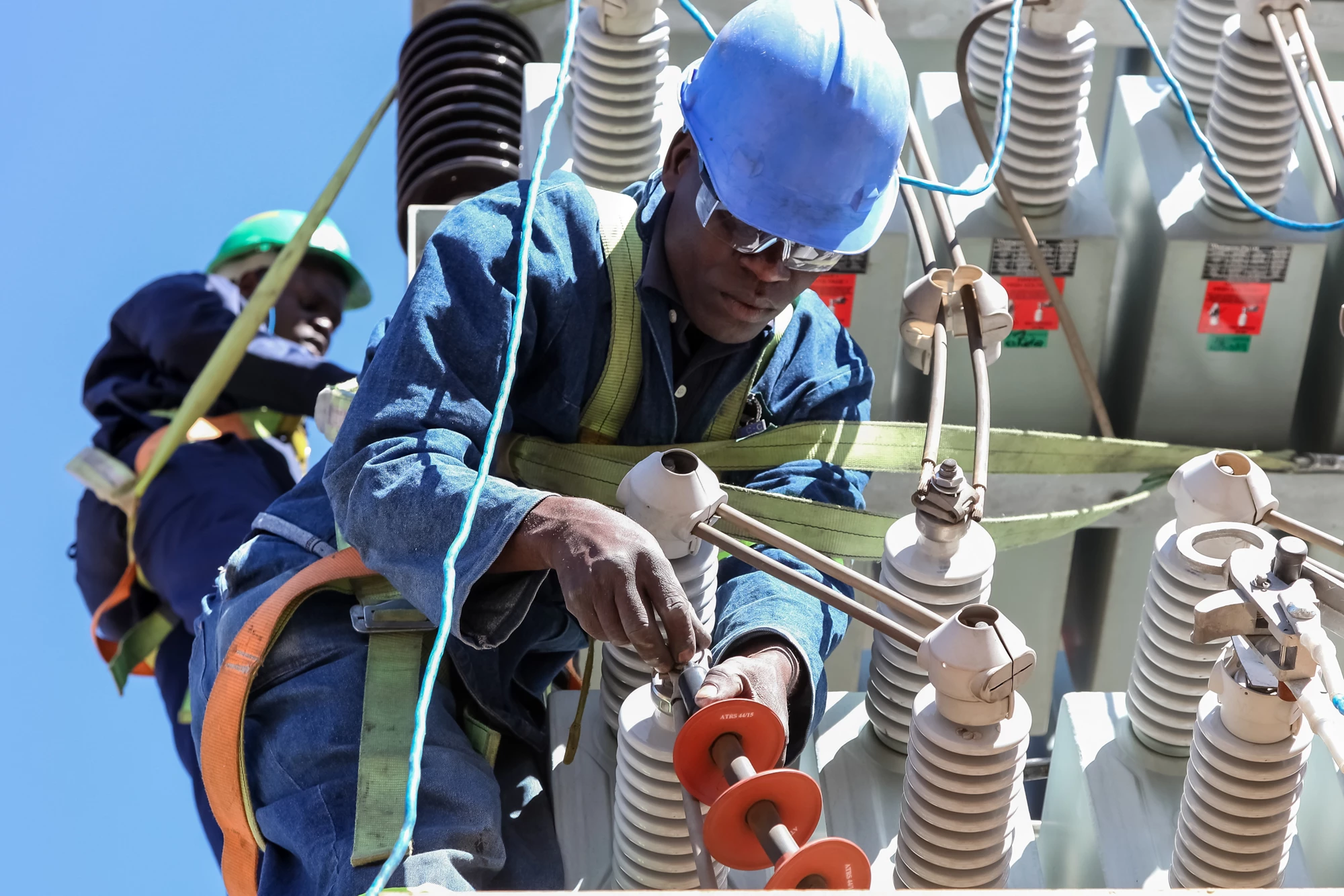
The 2026 Power Shift: Navigating State-Led Electricity Markets in Nigeria

The era of the “National Grid” as a single, fragile umbilical cord is over. By April 2026, the constitutional “Big Bang” of 2023 has fully materialized, transforming Nigeria’s energy landscape from a monolithic monopoly into a sophisticated, multi-layered regulatory tapestry.

For the modern Independent Power Producer (IPP) and energy investor, the conversation has shifted. We are no longer merely discussing “Nigerian Electricity”; we are navigating the nuances of the Lagos Independent Market, the Edo Power Hub, and the Enugu Energy Corridor.

The Context: A Fractured (but Functional) Monopoly

The transition has been swift. As of mid-2026, over 12 states have moved beyond mere legislative intent to establish fully functional State Electricity Regulatory Commissions (SERCs). This evolution has effectively ended the era of a centralized market under the Nigerian Electricity Regulatory Commission (NERC).

While NERC remains the “custodian of the center,” overseeing inter-state transmission and international trade, the real action for embedded generation and subnational distribution now happens at the state level. The legal landscape for IPPs has shifted from a “National Grid” conversation to a “State Market” reality, demanding a localized approach to risk and regulation.

The Jurisdictional Interface: A Risk Analysis

The primary challenge for the 2026 investor is Constitutional Duality. Under the Electricity Act 2023 (as amended), the division of labor is clear on paper but complex in practice:

  • NERC: Retains oversight over inter-state and international electricity trade.
  • SERCs: Govern intra-state generation, transmission, and distribution.

Key Risk Area: The “Regulatory Transplant”

As Distribution Companies (DisCos) transition from federal NERC oversight to State-led governance, existing Power Purchase Agreements (PPAs) face what we call “regulatory transplant” risk. Investors must be vigilant: legacy federal protections do not automatically “click” into place under new state laws. Ensuring that contracts are validly novated or mirrored is the difference between a bankable project and revenue leakage.

The 2026 IPP Risk Map

For investors in mini-grids, embedded generation, and alternative energy, FOAC has identified three critical risk zones that define the current market:

Risk Zone Potential Conflict Strategic Legal Safeguard
Tariff Divergence Discrepancy between NERC-approved “MYTO” tariffs and State-mandated pricing. Inclusion of a “Stabilization Clause” linking tariff adjustments to both Federal and State benchmarks.
Asset Stranding Grid expansion by TCN (Transmission Company of Nigeria) infringing on a State-licensed IPP’s territory. Explicit “Exclusivity Carve-outs” in the State License and Federal non-interference agreements.
Dispute Resolution Ambiguity on whether the Federal High Court or State High Court holds jurisdiction. Mandatory Multi-tiered Arbitration clauses specifying the Lagos Court of Arbitration (LCA) or LCIA as the seat.

Moving Forward: The FOAC Advantage

Navigating the 2026 power shift requires more than just technical expertise; it requires a deep understanding of the political economy of power. As states compete to offer the most investor-friendly environments, the “Regulatory Tapestry” will only grow more intricate.

At FOAC, we specialize in bridging the gap between federal legacy and state-led opportunity. Whether you are navigating the “Regulatory Transplant” of a legacy PPA or securing an “Exclusivity Carve-out” for a new solar hybrid, our goal is to ensure your investment remains grounded, even as the market shifts.

For further enquiries kindly contact the F.O. Akinrele & Co. Energy, Natural Resources & Mining Practice Group – info@foakinrele.com


 

AfCFTA Five Years On: From Blueprint to Border Post

For decades, the Nigerian economic narrative was written in “Black Gold.” However, as we cross the five-year milestone of the African Continental Free Trade Area (AfCFTA) in 2026, the ink is turning a deep shade of blue. The 2025 AfCFTA Achievements Report highlighted a staggering 35% increase in intra-African maritime trade, positioning Nigeria at a critical juncture.

Navigating the New Era of Intra-African Trade

It has been five years since the first shipment under the African Continental Free Trade Area (AfCFTA) crossed a border, signaling the start of what many called “the African century.” In 2021, the skeptics were numerous: the task of unifying 54 nations into a single market seemed more like a diplomatic dream than a commercial reality.

Yet, as we move through 2026, the narrative has shifted. Africa is no longer just “negotiating”; it is trading. From Kenyan batteries powering West African industrial zones to Rwandan coffee reaching North African tables, the “Made in Africa” label is becoming a staple of regional supply chains.

Most Recent Developments: The Engine Room is Humming

The last 18 months have seen the AfCFTA move from high-level policy to the “engine room” of implementation.

  • The GTI Expansion: What started as a pilot involving eight countries has evolved into the Guided Trade Initiative (GTI) 2.0. As of early 2026, over 39 countries are now participating, with 12 nations actively conducting commercially meaningful trade under AfCFTA rules.
  • The Digital Trade Protocol: A major milestone was the 2024 adoption of the Protocol on Digital Trade, with its final annexes ratified in early 2025. This provides a harmonized legal framework for e-commerce, data protection, and cross-border data flows, essential for the continent’s burgeoning “Silicon Savannahs.”
  • Rules of Origin (RoO): Negotiations are now 92% complete. This clarity has allowed manufacturers to plan long-term investments, knowing exactly what qualifies as “African” and can therefore benefit from tariff-free entry.

The Financial Plumbing: PAPSS Gains Traction

Perhaps the most significant “win” is the maturing of the Pan-African Payment and Settlement System (PAPSS). For decades, a Nigerian business paying a Ghanaian supplier often had to route money through New York or London, losing time and up to 10% in conversion fees—the infamous “USD detour.”

Feature The Old Way (Pre-2022) The PAPSS Way (2026)
Currency Reliance on USD, EUR, or GBP Settlement in Local Currencies
Time 3 to 7 business days Near-Instant
Cost High (double conversion + bank fees) Up to 30% reduction in transaction costs
Reach Fragmented regional silos 19+ countries and 160+ banks

The Positives: Reasons for Optimism

  1. Trade Resilience: While global supply chains have wobbled due to geopolitical tensions, intra-African trade is forecast to grow 10% in 2026, reaching an estimated $230 billion.
  2. Sectoral Shifts: We are moving away from raw commodity exports. Manufacturing and agri-food sectors now account for nearly 50% of intra-African trade flows.
  3. The Adjustment Fund: The $10 billion AfCFTA Adjustment Fund is now fully operational, supporting countries that experience revenue losses from tariff removals, ensuring that smaller economies aren’t left behind.

The Challenges: Concerns about the “Policy-to-Port” Gap

Despite the momentum, exceptional doesn’t mean perfect. The reality at the border post remains the biggest bottleneck.

  • Customs Cognitive Dissonance: There is often a gap between the Secretariat in Accra and the customs officer at a remote border. Many officers still default to legacy regional rules (like ECOWAS or SADC) rather than the AfCFTA regime, leading to delays and “dual-paperwork” headaches.
  • Infrastructure Deficits: Connecting two African cities shouldn’t feel like an odyssey. The continent still faces a massive logistics gap; it remains cheaper, in some cases, to ship a container from Shanghai to Lagos than from Lagos to Mombasa.
  • Non-Tariff Barriers (NTBs): While tariffs are falling, NTBs, such as cumbersome sanitary requirements and uncoordinated standards, remain the “invisible wall” of African trade.

Expectations for 2026 and 2027

What lies ahead for the next 24 months? We anticipate three major shifts:

  1. The Rise of “Mineral Beneficiation”

By 2027, expect to see the first wave of green-energy manufacturing hubs. With the Protocol on Investment fully ratified, we are seeing a shift from exporting raw lithium and cobalt to processing them within Africa to feed the global EV battery market.

  1. Services Trade Leapfrogging

Phase II negotiations on the Trade in Services will reach a critical mass. This isn’t just about tourism; it’s about professional services – law, accounting, and engineering, being exported across borders digitally, supported by the new Digital Trade Protocol.

  1. Deepening Regional Value Chains

We expect “Regional Value Chains” (RVCs) to mature. Instead of one country trying to build an entire car, we will see South Africa manufacturing the chassis, Morocco the electronics, and Zambia the wiring— all trading components tariff-free.

Post-Merger Integration: Navigating Legal Due Diligence in the 2026 Wave of Bank M&As

The dust has largely settled on the March 31, 2026, recapitalization deadline, and the Nigerian banking landscape has emerged fundamentally transformed. What began in 2024 as a regulatory mandate to fortify the financial system has culminated in a high-stakes “Great Consolidation.” However, for the institutions that chose the path of Mergers and Acquisitions (M&A), the signing of the transaction documents was merely the end of the beginning. The real challenge, and where the most significant legal risks reside, is Post-Merger Integration (PMI).

The Catalyst: The $1 Trillion Vision

Central to this 2026 wave is the Federal Government’s ambitious goal to transition Nigeria into a $1 trillion economy by 2030 (frequently discussed in terms of the initial $100 trillion Naira milestone). This is not merely a vanity metric; it is a structural necessity. To support an economy of that scale, Nigeria requires “mega-banks” capable of underwriting massive infrastructure projects, supporting a revitalized manufacturing sector, and managing the complexities of a unified foreign exchange market.

The 2024–2026 recapitalization exercise was the engine room for this vision. By raising the minimum capital for international banks to ₦500 billion, the Central Bank of Nigeria (CBN) effectively signaled that only the most resilient and legally sound institutions would lead the charge toward the trillion-dollar horizon.

Beyond the Deal: The Post-Merger Legal Minefield

In the current climate, legal due diligence is no longer a static pre-deal checklist; it is a dynamic, ongoing process that defines the success of the integration phase. At F.O. Akinrele & Co, we have observed that the most successful integrations in this wave prioritize three legal pillars:

  1. Regulatory Harmonization and BOFIA 2020 Compliance

Post-merger, the “New Entity” must reconcile two different operational frameworks under the Banks and Other Financial Institutions Act (BOFIA) 2020. This involves more than just a fresh coat of paint on the headquarters. Legal teams must ensure that the consolidated credit-risk frameworks and corporate governance structures satisfy the CBN’s stringent post-recapitalization oversight.

  1. The “Clean Team” and Antitrust Integrity

With the Federal Competition and Consumer Protection Commission (FCCPC) taking a more granular interest in market dominance, banks must navigate the “integration transition” without violating anti-competition laws. Managing “gun-jumping” risks, where parties begin integrating operations before final approvals—remains a critical legal tightrope.

  1. Data Privacy and IT Convergence

In the 2026 digital-first banking era, merging two legacy IT systems is a data privacy nightmare. Under the Nigeria Data Protection Act (NDPA), the transfer of millions of customer records requires airtight legal protocols. A single data breach during system migration can result in catastrophic fines and a total loss of public trust.

The Road Ahead

The 2026 wave has proven that capital is only half the battle; clarity is the other half. As banks strive to meet the $1 trillion economic mandate, the focus must shift from “closing the deal” to “perfecting the union.”

At F.O. Akinrele & Co, we remain at the forefront of this transition, providing the sophisticated legal architecture required to turn complex mergers into stable, market-leading institutions.

For further enquiries kindly contact the F.O. Akinrele & Co. Banking, Corporate Finance, M & A & Capital Markets – info@foakinrele.com